


It is Tuesday. You have nothing to do.
Not “nothing urgent”. Nothing. The coffee is on the table, the sea is thirty metres away, and the only decision on the agenda is whether to swim before lunch or after.
This is what capital is supposed to buy. Time, light, and the absence of obligation.
And here is what almost nobody tells you: this version of life is cheaper than the one you are living now.
In the right jurisdiction, the dividends, the rents and the gains that pay for it are taxed at zero, or close enough that the difference stops mattering. The same income, in the wrong country, is taxed near 40%. Every year, on capital you already paid tax on once.
That gap is not a loophole. It is published statute in countries that would rather have your money inside their borders than outside them.
Which is why the best countries to retire are not the ones with the cheapest property. They are the ones that barely tax passive income at all: Panama at 0% on all foreign income, Mauritius with no capital gains tax and no inheritance tax whatsoever.
Five of them below, counted down to number one.
What Makes the Best Countries for Retirees?
Most retirement rankings measure the wrong thing. Cost of living shaves a little off your spending. Tax takes a slice off your entire income, every year, for as long as the retirement lasts.
And if you are retiring on capital rather than on a salary that stopped, the order of the questions changes.
1. How does it tax investment income? Dividends, interest, foreign rents. This is the line that funds the life, so it is the line that decides the country.
2. How does it treat capital gains and inheritance? How much of your wealth survives a sale, and how much survives you. The two people check last and regret first.
3. How does it tax a foreign pension? Relevant, but rarely decisive at this level.
4. How easy is it to get in, and to stay? A perfect tax regime you cannot get a residence permit for is worth nothing.
Score the world on those four and the same handful of names keeps coming back.
The Five Best Countries to Retire, at a Glance
| Country | Investment income | Gains & inheritance | Foreign pension | Main route in |
|---|---|---|---|---|
| Panama | 0% on all foreign-source income | Foreign-source gains untaxed | 0% (territorial system) | Pensionado visa, from $1,000/month pension |
| Mauritius | Remittance basis, low rates on amounts brought in | No capital gains tax, no inheritance tax | Taxed only on what you remit | Retirement permit (50+), approx. $2,000/month, 10 years |
| Greece | Flat 7%, or a €100,000 lump sum for larger fortunes | Covered by whichever regime you elect | Flat 7% for 15 years | EU citizens freely, Golden Visa for non-EU |
| Dominican Republic | Foreign income exempt under the rentista regime | Territorial treatment of foreign wealth | Exempt under the retiree regime | Rentista or investor residency |
| Cyprus | Dividends and interest effectively exempt under non-dom, 2.65% capped health levy only | No inheritance tax | 5% above a €5,000 exemption, lump sums untaxed | EU citizens freely, Golden Visa approx. €300,000 for non-EU |
Looking for the best country to retire? Let's confirm which one is yours.
Panama taxes your foreign income at zero. Greece caps it at a flat 7%. Which one wins depends on how your money arrives. In your free consultation, we run your numbers and tell you.
#5 Cyprus: The Easiest Low-Tax Retirement Inside the EU
Cyprus leaves dividends and interest effectively untaxed under its non-dom regime, taxes foreign pensions at a flat 5% above a €5,000 annual exemption, and does not tax pension lump sums at all.
It is where a great many European retirements quietly end up. Mediterranean life, EU membership, and rules written to be used rather than argued about.
Start where the money is. Under the non-dom regime, dividends and interest are effectively free of Cypriot income tax. What remains is the GESY health contribution at 2.65%, and even that is capped, so the levy stops growing however large the portfolio gets. For someone living on a seven-figure dividend stream, that ceiling is the whole argument: your tax bill decouples from your income and stays where it is.
Add no inheritance tax, and the succession side is quiet too.
The pension rules are softer, but still good. That 5% only bites above the exemption, a small rate on a small base. And the detail almost nobody mentions: take your pension as a lump sum and Cyprus does not tax it.
EU and EEA citizens settle freely. Everyone else can use the Cypriot Golden Visa at around €300,000 in property.
Cyprus is not the lowest number on this list. It is the one that asks the least of you to get there, and for a portfolio it sits closer to the top than its ranking suggests.
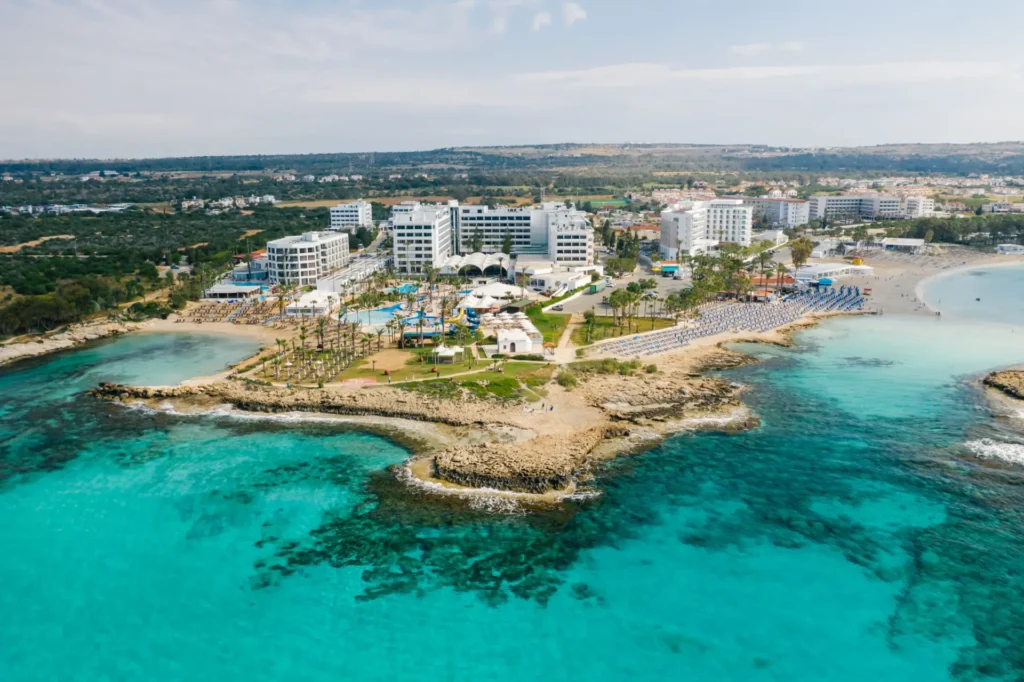
#4 Dominican Republic: Zero Tax on Foreign Income
The Dominican Republic exempts foreign pension income and foreign rentista income from local tax entirely.
This is the coconuts-and-palm-trees version. Warm water every month of the year, and income from abroad that arrives whole.
There are two doors. The rentista route, for anyone with a steady, provable income from outside the country (which, for a retired investor, is exactly what a portfolio produces). Or the investor route, for those who would rather place capital in the country than document a monthly stream.
The investor route has an angle worth pausing on. Dominican real estate still produces yields that most European markets stopped producing a decade ago, so the property that buys your residency can behave like an actual investment rather than a permit you happen to live in. We have clients who now hold a producing asset and a zero-tax retirement out of the same transaction.
The honest caveat: this is the least institutional option on the list. Banking, healthcare and legal process do not run the way they do in Nicosia or Athens, and that matters when you are planning for the next thirty years rather than the next three.

#3 Greece: One Flat 7% on Everything for 15 Years
Retirees who move their tax residency to Greece can elect a flat 7% on all foreign income (pension, dividends, interest and foreign rents) locked in for fifteen years.
If Cyprus is a set of good rules, Greece is one good rule.
And the scope is the point. Not 7% on the pension and normal rates on everything else. 7% on all of it, the entire foreign side of your finances discharged at a single rate.
That simplicity is the product. You are not modelling three scenarios every December to find out what you owe. One rate, one number, fifteen years, on an island where the sea is the view rather than the holiday.
And if the fortune is large, Greece has a second door. The non-dom regime caps all foreign income at a flat €100,000 a year, whatever the income, for up to fifteen years. A fixed lump sum rather than a rate, which for very high incomes is a shrinking effective rate. The two cannot be combined, so you elect the one that fits your numbers.
We break those numbers down in full in our guide to the Greece non-dom regime.
EU and EEA citizens settle freely. Everyone else needs a residence basis first, usually the Greek Golden Visa.

#2 Mauritius: No Capital Gains Tax, No Inheritance Tax
Mauritius has no capital gains tax and no inheritance tax, and taxes other income only on what you actually bring into the country.
This is the one nobody sees coming. A small island in the Indian Ocean that almost never makes a retirement shortlist, and quietly outperforms most of the places that do.
Neither of those two absences is conditional on a special regime, an election, or a minimum investment. They are simply how Mauritius works. Over thirty years, that means every position you trim, every property you sell, and eventually the estate itself, all passing without a tax event attached.
How the Mauritian Remittance System Works
Ordinary income sits on a remittance basis. You are taxed on the money you bring into the country, not on what you earn worldwide. Keep income offshore and Mauritius does not tax it.
In practice, you decide how much enters the tax net each year. One caveat: remit large sums and an additional contribution can apply on top, so the pattern has to be planned in advance rather than discovered afterwards.
Getting in is open. Over fifty, the retirement permit asks for roughly $2,000 a month into a local account in exchange for ten years of residency, with a property investment route as the alternative. And there is no minimum stay.

#1 Panama: The Best Country to Retire With Zero Tax
Panama runs a pure territorial tax system, so foreign pensions, foreign social security and income from an offshore portfolio are not taxed in Panama at all.
Not a concessionary rate. Not a fifteen-year window. Not an election you qualify for and renew. Income earned outside Panama simply falls outside the tax base, and stays that way for as long as you live there.
That is why it takes the top spot. Every other country on this list gives you a good number. Panama removes the number.
For a retired investor that means the dividends, the rents and the gains sit outside the system, without a special status you could one day fail to qualify for. Simple, legal, effective, and durable in a way that elected regimes are not.
The way in is the most famous retirement visa in the world. The Pensionado grants permanent residency from day one on a verified lifetime pension of around $1,000 a month, with statutory discounts on healthcare and travel.
If your money does not arrive as a pension, the Friendly Nations visa sits at roughly $200,000 and the investor visa at around $300,000 (thresholds set by Panama, not fees for advice).
The economy runs on US dollars, so there is no currency risk between your savings and your spending. Pacific beaches on one coast, Caribbean on the other, and Miami two hours away.
Key Points: Before You Choose
- Entry thresholds run from roughly $1,000 a month (Panama Pensionado) to €300,000 (Cyprus Golden Visa), and every one of them is set by the country, not by an adviser
- A residence permit and tax residency are two different things, and most of these regimes require both
- Every regime here depends on a genuine change of tax residency, which means leaving your current jurisdiction cleanly as well as arriving in the new one
- US citizens remain taxable on worldwide income wherever they live, so these figures change the plan rather than ending it

Which Country Is Right for You?
There is no single best country to retire. There is a best country for your income mix, your passport and your family. Read this as a set of if-thens.
| If this is your situation | Strongest candidate | Why |
|---|---|---|
| You live off dividends and interest | Cyprus or Panama | Cyprus exempts both under non-dom (capped levy only), Panama does not tax foreign income at all |
| You live off selling assets | Mauritius | No capital gains tax, with no regime to elect and no threshold to meet |
| Succession to your children is the priority | Mauritius or Cyprus | Neither applies inheritance tax |
| You want one predictable number on everything | Greece | A flat 7% on all foreign income for 15 years, or a €100,000 lump sum if the income is very large |
| You want to stay inside the EU | Cyprus or Greece | Both EU members, with free establishment for EU citizens |
| You want flexibility, not a minimum stay | Mauritius | The retirement permit imposes no minimum days in country |
| Your family is in North America | Panama | A dollar economy a few hours' flight from the United States |
| You want the beach, at the lowest entry cost | Dominican Republic | Foreign pension and rentista income exempt, with an accessible rentista route |
What Most People Get Wrong About Retiring Abroad
The country is the easy decision. Almost everything that goes wrong goes wrong somewhere else.
They arrive properly and leave badly. Establishing residency in Panama is straightforward. Ceasing to be resident where you are now is not, and that is the side that costs money. A country that taxes your dividends at zero does nothing for you if your former one still considers you resident and taxes them at 40%.
They move first and structure afterwards. Where a portfolio is held and how a property is titled are decisions that are cheap before the move and expensive after it. Sell an asset from the wrong jurisdiction and you can hand over more in one transaction than the regime saves you in five years.
They confuse a residence permit with tax residency. A Golden Visa gives you the right to be somewhere. It does not, by itself, make you tax resident there or stop another country taxing you.
They assume the rules will still be there in ten years. Britain abolished its non-dom status in 2025. Portugal retired the NHR regime. Italy tripled its flat charge. The regimes that close hardest are the ones that got most popular, which makes Panama’s structural territorial system a different kind of bet from a fifteen-year election.
Final Thoughts
The gap between these five countries and the one most people retire in is not marginal. It is the difference between zero, or a flat 7%, and a progressive scale that tops out near 50%.
And here is the part worth sitting with. A retirement is not taxed once. It is taxed annually, for as long as it lasts. Take the rate on a passive income from 40% to zero at sixty-five, and across thirty years the compounding difference is not a saving. It is a second portfolio, and it usually ends up with your children instead of with a treasury.
But none of these regimes is a brochure you tick. Every one requires a real change of tax residency, which means leaving your current jurisdiction cleanly, arriving in the new one properly, and being able to prove both.
One honest caveat. If you are a US citizen, none of this removes your US filing obligation. America taxes on citizenship, not residence. There is still real planning to be done, but the zero on this page is not the same zero for an American that it is for a European.
For the wider view, see our guide to zero and low tax countries.
How TaxMove Can Help You
Choosing the country is the easy part. It is everything around the choice that costs people money, and it usually costs them after the move rather than before it.
- We match the jurisdiction to your income mix. A retiree on a state pension and a retiree on a dividend portfolio should not move to the same country.
- We exit your current tax residency cleanly. Exit taxes and tie-breaker rules can follow you for years if the departure is handled loosely. Leaving matters as much as arriving.
- We handle residency, structure and the tax election as one process, and stay with you afterwards.
One team, one plan, from the first question to your first full tax year abroad. Not a slide deck, the implementation.
Book your free initial consultation and we will run your numbers with you, properly, before you commit to any move. Your Move Starts Here.