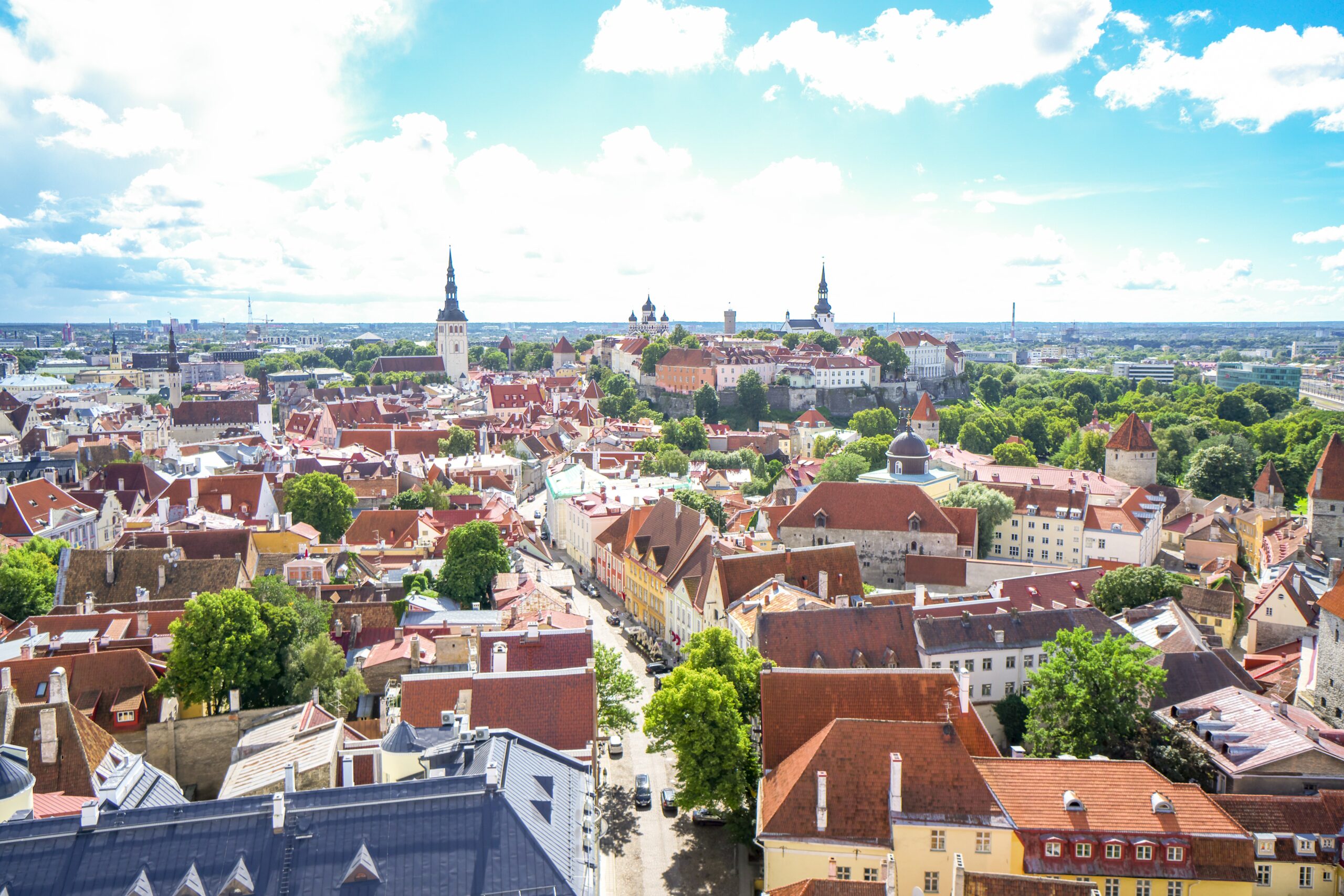


Picture the version of your life where the Danube is your morning view, where your children walk to school through the streets of District V, and where the thermal baths that emperors once used are a fifteen-minute stroll from your front door. Now picture the invoice. In Budapest, that life costs a fraction of what it costs in Lisbon, Milan or Vienna, and you can reach all three by car or by a €30 flight.
Here is what turns a lifestyle daydream into a strategy. Hungary charges a flat 15% personal income tax and a 9% corporate income tax, the lowest in the European Union. Its Golden Visa, formally the Guest Investor Residence Permit, requires €250,000 into an approved real estate fund and issues a residence permit valid for ten years, renewable once, with no minimum stay requirement. And unlike almost every other programme in Europe, you get approved first and invest afterwards.
So why has nobody heard of it? Because Portugal, Greece and Italy owned the conversation for a decade, and Hungary quietly relaunched in 2024 while everyone was looking elsewhere. Below you get the whole picture: what qualifies, what the process actually looks like, what Hungary really taxes, an honest read on where the programme falls short, and a ninety-second test to tell you whether you are a fit.
What the Hungary Golden Visa Actually Is
Hungary relaunched investor residency under the Guest Investor Programme, replacing the residency bond scheme that ran from 2013 to 2017.
There is one qualifying route. That is the entire list.
The direct property purchase route does not qualify. If a source tells you that buying a Budapest apartment gets you the permit, that source is out of date.
One number. One route. No fine print. In a category built on complexity, that is unusual, and it is a feature.
| Hungary Guest Investor Programme | |
|---|---|
| Investment | €250,000 |
| What you buy | Units in a real estate investment fund registered with the National Bank of Hungary |
| Recoverable | Yes, after a five-year holding period |
| Permit granted | 10 years, renewable once, for 20 years total |
| Minimum stay | None |
| Processing time | Around 6 months |
| Language requirement | None |
| Family included | Spouse and children |
The Structural Advantage Nobody Talks About
You do not commit the money before you know the answer.
You apply for the Guest Investor Visa and declare your investment. You do not have to complete it at that stage. The Migration Office runs its due diligence first. Only once the visa is issued do you travel to Hungary and finalise the investment, within 93 calendar days of entry. Then the residence permit follows.
Because the hard vetting happens before your capital moves, an investor who clears the visa stage faces a very low probability of refusal at the permit stage. Read that again, and then compare it to any programme where you wire the money, buy the asset, and wait to discover whether you qualified.
That is not a marginal difference. That is a different risk profile entirely.
Key Points
- One route only: €250,000 into a fund registered with the National Bank of Hungary
- The investment is recoverable after five years, not written off
- The permit runs 10 years and renews once, giving 20 years of secured EU residency
- Zero minimum stay to obtain, hold or renew the permit
- Capital is committed after visa approval, within 93 days of entry
- No language test, no medical test, no business experience requirement
- Processing takes roughly six months end to end
- Family is included: spouse and children under 18
Taxes in Hungary: Not the Tax Hell You Left
Most of Europe treats a successful person as a resource to be mined. Hungary does not. It is not a zero-tax jurisdiction, and anyone selling it as one is lying to you. But the numbers sit in a different universe from the ones you are probably paying now.
Personal income tax is a flat 15%, applied to nearly every category of income. Not 45%. Not a progressive ladder that punishes you for earning more. Fifteen percent, on employment income, on self-employment income, on rental income, on capital gains, and on dividends. Dividend income carries an additional 13% social tax, but its base is capped at 24 times the minimum wage, which means that for anyone drawing serious distributions the social tax becomes rounding error and the effective rate converges on 15%. Set that against what a business owner in Spain, France or Germany surrenders on the same dividend and the arithmetic speaks for itself.
Corporate income tax is a flat 9%, the lowest rate in the European Union. Hungary also levies no withholding tax under domestic law on outbound dividends, interest, royalties or management fees paid to foreign entities. Add a local business tax of up to 2% on net revenue and the realistic all-in burden on a Hungarian company lands between 9% and 11%. Hungary further operates a participation exemption on qualifying capital gains, which is what makes it a credible holding jurisdiction rather than merely a cheap one.
One distinction that almost every article blurs: holding a Hungarian residence permit does not, by itself, make you a Hungarian tax resident. Liability on worldwide income arises only if you become an effective resident, which turns on the 183-day rule and on where your centre of vital interests sits. The permit is an option, not a trigger. Whether you exercise it is a strategy question, and it is precisely the question we exist to answer.
Thinking about Hungary? Let's confirm it's the right move.
A residence permit is an instrument, not a strategy. In your free consultation, we look at where you are tax resident today, how your company is structured, and where your income actually arises, then tell you whether Hungary is genuinely your best option, or point you toward one that fits you better.
The Political Variable You Should Factor In
Hungary’s government changed in 2026 after sixteen years in power, and that is worth understanding rather than panicking about.
The immediate market reaction was positive. The forint strengthened, and the shift is expected to release EU funds that had been withheld, with analysts projecting a measurable lift to Hungarian GDP. On the economics, this is a tailwind.
On the Golden Visa itself, the honest answer is that nobody knows yet. A new administration has three options: leave the programme untouched, amend it, or close it. Across Europe, the trend of the last five years has run toward closure and tightening, not expansion. Portugal removed its property route. Greece raised its thresholds. Spain shut its programme entirely. Hungary may prove the exception, but that is a hope, not a plan.
What this means in practice is simple. Programmes are almost never closed retroactively for those already inside them. They are closed to new applicants. If Hungary is the right instrument for your situation, moving early costs you very little. Moving late may cost you the door.
That is not a reason to rush a decision you have not thought through. It is a reason to make the decision now rather than in eighteen months.
Do I Qualify for the Hungary Golden Visa? A Ninety-Second Test
Answer these five honestly.
1. Are you a citizen of a non-EU, non-EEA country? If not, you do not need this programme. You already have freedom of movement across the EU.
2. Can you commit €250,000 to a five-year fund position? The capital is recoverable at the end of the holding period, but it is locked for the duration. If that lock-up is uncomfortable, this is not your programme.
3. Can you document the lawful source of those funds to institutional standard? Hungarian due diligence runs before your visa is issued, with input from law enforcement and national security services. If your source-of-funds story is complex, it needs to be built properly, not improvised.
4. Is your objective long-term EU residency and optionality rather than a fast passport? If you want an EU passport quickly, Hungary is the wrong door. So, as of 2026, is Portugal. See below.
5. Are you willing to travel to Budapest at least once, and complete the investment within 93 days of arrival? Physical presence afterwards is zero. But the process itself is not remote.
Five yeses make you a strong candidate. A single no on questions 2, 3 or 4 usually means a different jurisdiction fits you better, and we will tell you which.
Hungarian Passport: Why It’s a Long Road
Every competitor selling this programme waves “EU citizenship pathway” in front of you. Here is what they leave out.
Citizenship requires eight years of physically residing in Hungary, plus a language test proving a basic command of Hungarian. And Hungarian is one of the hardest languages in Europe for a foreigner to learn. Permanent residence, the step before it, requires living in the country for three years.
So there is a real tension at the heart of this programme, and it deserves to be named plainly. The zero-stay requirement is the programme’s greatest strength and the exact thing that disqualifies you from naturalisation. You cannot have both. You either hold Hungary as a residency asset without living there, or you actually move and start the eight-year clock.
Both are legitimate strategies. They are simply not the same strategy, and choosing between them is the real work.

Hungary vs Portugal vs Greece: The 2026 Picture
| Hungary | Portugal | Greece | |
|---|---|---|---|
| Entry investment | €250,000 (fund) | €250,000 (cultural donation) or €500,000 (fund) | €250,000 specialised, €400,000 standard, €800,000 prime |
| Real estate purchase | Not a qualifying route | Closed since October 2023 | Active, tiered |
| Permit validity | 10 years, renewable to 20 | Renewed every 2 years | 5 years, renewable |
| Minimum stay | None | 7 days per year on average | None |
| Capital committed | After visa approval | Before application | Before application |
| Processing time | Around 6 months | 12 to 18 months | 4 to 6 months |
| Citizenship timeline | 8 years of residence, Hungarian language test | 10 years for most nationalities, 7 for EU and CPLP, plus A2 Portuguese and civic exam | 7 years of real residence, B1 Greek |
| Corporate tax | 9%, the lowest in the EU | Substantially higher | Substantially higher |
| Personal income tax | 15% flat, dividends included | Progressive | Progressive |
Portugal advertises €250,000, but that figure is a cultural donation, gone the moment you pay it and never returned. A recoverable position starts at €500,000. And in May 2026 its Nationality Law pushed the road to a passport from five to ten years, with a language and civic exam on top, so the fast passport that was Portugal’s whole appeal is now a decade away.
Greece also advertises €250,000, but that tier only buys specialised conversions and restorations, and Greek law firms are blunt that most properties sold at that price do not qualify. The realistic entry for a standard purchase is €400,000, for a single 120 m² property you must keep, with short-term rental banned under a €50,000 fine. What you get is a real Mediterranean home, but a managed asset, committed before you are even approved.
Hungary is the only one of the three where the advertised number is the number you pay, and get back. Its €250,000 buys fund units you hold for five years and then recover with any return, on top of a ten-year permit, zero required stay, and the lowest tax rates in the EU. Portugal keeps your money; Greece ties it to a building; Hungary lends itself your capital for five years and hands it back. Judged on headline price, all three look the same. Judged on structure, they are not in the same category.
Final Thoughts
There is a quiet logic to Hungary that the flashier programmes lack. It does not promise you a fast passport or a villa on an island. It promises something narrower and, for the right person, more useful: two decades of European residency, secured for the lowest entry price on the continent, with your capital returned at the end and almost nothing asked of you in between.
Put it beside its rivals and the shape of the choice becomes clear. Portugal takes a quarter of a million euros and keeps it. Greece asks nearly double, plus a property to look after, and rewards you with sunshine and, if your foreign income is large enough, a flat tax worth having. Hungary does something less romantic and more efficient. It lets you hold a piece of Europe in reserve, cheaply, backed by the lowest tax rates in the Union, and hands your money back when the five years are up.
Whether that is the right instrument for you depends entirely on your own numbers, and that is not a question a web page can settle. Get the structure right before you commit, though, and Hungary stops being a line item on a list of Golden Visas. It becomes the most quietly intelligent way into Europe that money can currently buy.
How TaxMove Helps You
The Hungarian programme looks simple from the outside, and that is exactly what makes people careless with it. One fund, one number, no fine print. But the difference between a permit that sits on top of a smart structure and one that quietly locks up a quarter of a million euros for nothing is everything, and it is decided before you ever wire the money.
That is the part we own. Not the brochure, the structure underneath it.
- We start with your position, not the product. Where you pay tax now, how your company is built, where your income lands. Until that is on the table, no one can tell you whether Hungary is worth a euro to you.
- We get the investment right. The fund has to be registered with the National Bank of Hungary and meet the Guest Investor criteria precisely, so your €250,000 both qualifies you and comes back to you at the end of the five years, rather than merely one or the other.
- We run the sequence that makes Hungary special. Declare, clear due diligence, then invest inside the 93-day window once the visa is granted. Handled properly, your capital commits only when refusal is already off the table.
- We answer the tax question you actually have. The permit alone will not make you a Hungarian tax resident. Whether becoming one serves you, and how the 15% personal and 9% corporate rates slot into your wider setup, is where the real value sits.
From the first conversation to the residence card in your hand, it is one team and one plan. And the way to begin is simple: book a free initial consultation, and we will pressure-test whether Hungary is genuinely your move before you commit anything.
Frequently Asked Questions About Hungary Golden Visa
How much is the Hungary Golden Visa?
€250,000 into a real estate fund registered with the National Bank of Hungary. Government, legal and fund fees apply on top.
What's the cheapest Golden Visa in Europe?
Hungary, at €250,000, is among the cheapest and the best value, because that money is invested and fully recovered after five years rather than spent. Programmes with lower headline figures are usually non-recoverable.
Is the Hungary Golden Visa still available in 2026?
Yes. The Guest Investor Residence Permit remains open. Direct property purchase does not qualify; the fund route does.
Do I have to live in Hungary to keep the Hungary Golden Visa?
No. There is no minimum stay to obtain, hold or renew the permit. Stay requirements apply only if you pursue permanent residence or citizenship.
Is the €250,000 Hungary Golden Visa investment recoverable?
Yes, after a five-year holding period, along with any return the fund has generated.
How long does the Hungary Golden Visa take?
About six months from application to residence card.
Can I include my family in the Hungary Golden Visa?
Yes. Spouse, children (including students up to 25), and financially dependent parents and in-laws each receive their own residence card.
Can the Hungary Golden Visa lead to a Hungarian passport?
Eventually, but slowly. Eight years of physical residence plus a Hungarian language test. It is not a fast passport route.
Who is eligible for the Hungary Golden Visa?
Non-EU and non-EEA citizens who can commit €250,000 to an approved fund and document a lawful source of funds.